

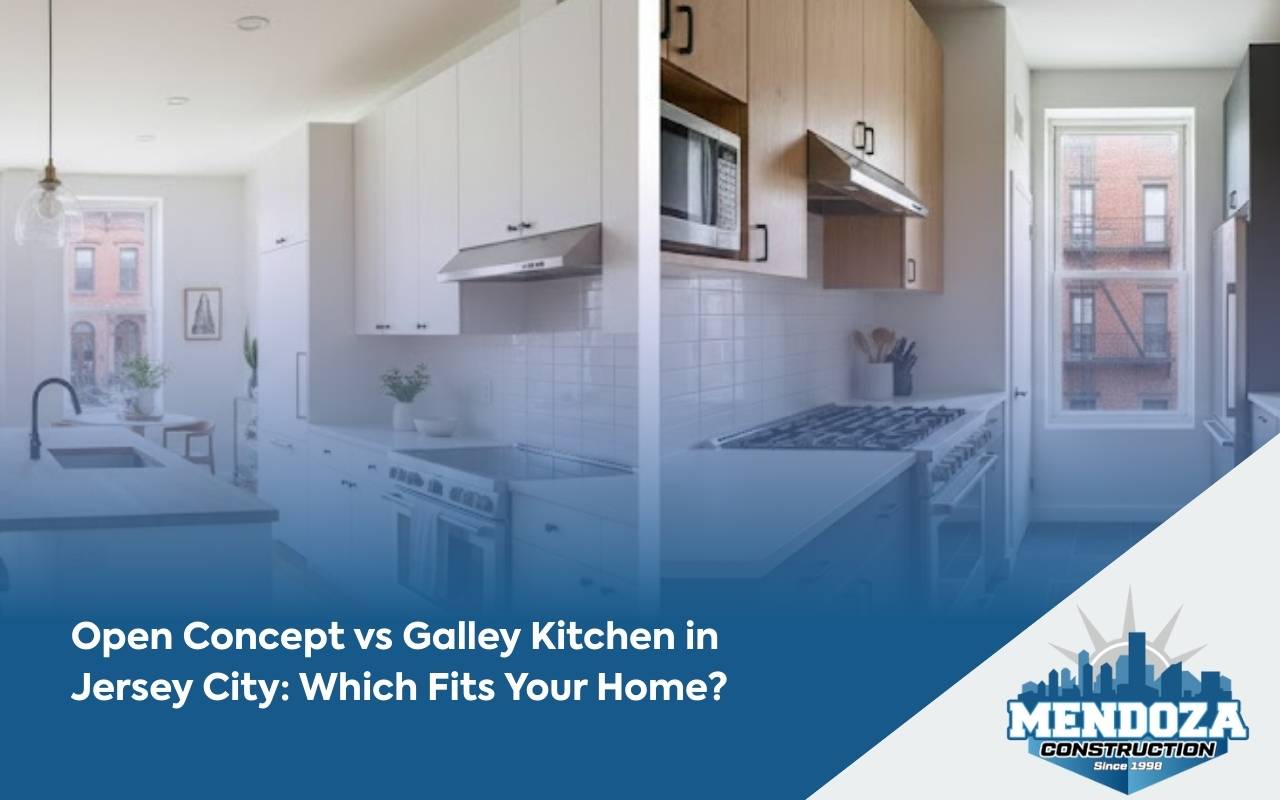
Open Concept vs Galley Kitchen in Jersey City: Which Fits Your Home?
Open Concept vs Galley Kitchen in Jersey City is a big decision that shapes how you live each day. As you compare floor plan choices, remember that your kitchen layout affects daily routines, traffic flow, and long-term resale considerations.
The kitchen is the heart of the home, yet its design can either support family time or create hidden challenges. Whether you want a lively, social space or a compact, efficient one, your choice will influence future buyers and how your home fits Jersey City’s style.
Pros and cons of open-concept kitchens in Jersey City
First, consider why open-concept kitchens are so popular in Jersey City homes and condos. This layout creates a generous sense of space, even in smaller properties, and lets natural light move freely between kitchen, dining, and living areas. As a result, your home can feel brighter, larger, and more welcoming.
Entertain guests while cooking without feeling isolated in a separate room.
Keep an eye on kids doing homework at the island or relaxing in the living room.
Enjoy better visual connection between cooking, dining, and relaxing zones.
Meanwhile, weigh the drawbacks before settling on Open Concept vs Galley Kitchen in Jersey City. Cooking smells and noise easily spread across the entire living area. In addition, clutter is always visible, which can feel stressful if you prefer tidy, quiet rooms.
You may also notice higher cleaning demands because every mess is on display. Furthermore, creating an open layout often requires removing walls, adding beams, and moving HVAC or electrical lines. These structural changes usually require permits and careful planning with a professional contractor.
Pros and cons of galley kitchens in Jersey City
Now, think about the benefits of a galley kitchen, especially when space is tight. With cabinets and counters along two parallel walls, this layout maximizes storage and keeps everything within easy reach. Therefore, it works well for serious cooks who value efficiency and well-organized work zones.
Short, direct paths between sink, stove, and refrigerator reduce wasted movement.
Extra wall space allows more upper cabinets and deep drawers.
Cooking noise and odors stay more contained, protecting nearby rooms.
However, a galley kitchen can feel crowded when several people cook together. Traffic flow may suffer if family members frequently pass through to reach other rooms. Seating is limited, too, so the kitchen may not become a natural gathering spot.
Additionally, narrow dimensions can look dark or closed-in without good lighting and light-colored finishes. Some buyers may consider a galley layout less modern than an open plan. Consequently, resale considerations matter if your target market strongly prefers open spaces.
Design considerations for open-concept kitchens
Coordinating layout and adjacent spaces
When designing an open-concept kitchen, start by mapping how it connects to the living and dining areas. The goal is a smooth flow that guides people naturally between zones while keeping the kitchen functional. Matching or coordinating finishes, colors, and hardware helps everything feel unified instead of visually busy.
Next, plan how traffic will move around islands, tables, and sofas. Ensure clear walking paths so guests and family members do not bump into chairs or appliances. Thoughtful planning keeps the space comfortable during everyday routines and social events.
Islands, lighting, and visual balance
A well-sized island can act as a gentle divider between kitchen and living room. It offers extra prep space, casual seating, and storage while keeping the open feeling. Choose countertop and cabinet finishes that complement nearby furniture to create a cohesive look.
Layered lighting is also essential. Combine recessed lights, pendants over the island, and task lighting under cabinets. Moreover, add table lamps or sconces in the living area so the whole open room feels warm and functional from morning to night.
Design considerations for galley kitchens
Planning the work triangle and clearances
In a galley kitchen, efficiency depends on a smart work triangle between sink, stove, and refrigerator. Keep these elements reasonably close so you can prep and cook without unnecessary steps. At the same time, maintain at least 36 inches of clearance in the aisle so movement stays comfortable.
If the space allows, designate one side for cooking tasks and the other for prep or cleanup. This simple rule helps prevent people from bumping into each other during busy meal times.
Maximizing light and visual width
Because galley kitchens can feel narrow, use design choices that visually widen the space. Light cabinet colors, reflective backsplashes, and slim hardware all reduce visual weight. Additionally, consider open shelves or glass-front doors on a few upper cabinets to break up solid blocks of storage.
Good lighting is crucial here as well. Combine under-cabinet lighting, ceiling fixtures, and possibly a small window treatment that allows natural light while preserving privacy.
Functional aspects of open-concept kitchens
From a practical point of view, open-concept kitchens make multitasking much easier. One person can cook while another cleans, and both can still chat with people in the living room. This flexibility supports busy families who juggle cooking, homework, and relaxation in the same shared area.
Furniture can also adapt as your lifestyle changes. You might rearrange sofas, add a home office corner, or shift the dining table without moving walls. This flexibility suits Jersey City homes where every square foot counts.
However, open layouts demand strong ventilation. A quality range hood or downdraft system helps control smoke, grease, and humidity that might otherwise spread across the entire space. Additionally, choose durable, easy-to-clean flooring, such as sealed hardwood or tile, because spills are more visible in one large room.
Functional aspects of galley kitchens
In galley kitchens, everything stays within arm’s reach. This close setup supports focused cooking, especially if you love following recipes step by step. You can group tools, spices, and pans near their related zones, which simplifies both prep and cleanup.
The compact footprint also makes it easier to place outlets exactly where you need them. Under-cabinet lighting and well-positioned switches are usually simpler to install along two straight walls. Consequently, the entire workspace can feel bright and practical.
Still, safety remains important when multiple people use a galley kitchen. Slim pull-out pantries and narrow drawers reduce door collisions in tight aisles. Whenever possible, include a small landing space beside the stove where you can place hot pots without crossing the aisle.
Incorporating dining areas in open-concept kitchens
When you add a dining area to an open-concept layout, aim for visual harmony. Choose a table, chairs, and stools that echo your cabinet style or flooring tone. This way, the kitchen, dining, and living areas feel like parts of one coordinated space instead of separate boxes.
A kitchen island with barstools can double as a breakfast nook and a homework station. Meanwhile, a round or rectangular dining table placed near the cooking zone can serve as a more formal spot. Always leave enough clearance around chairs so traffic flow remains smooth.
Use lighting and rugs to subtly define the dining corner. For example, a pendant or chandelier over the table anchors the area, while a rug adds texture and comfort. These small choices organize the open room without blocking views.
Optimizing storage in galley kitchens
Storage planning can transform a galley kitchen from cramped to efficient. First, look up and consider extending upper cabinets to the ceiling, using the highest shelves for rarely used items. Pull-out spice racks, narrow sliding pantries, and magnetic knife strips turn small gaps into hardworking storage.
Next, think about multifunctional features. Toe-kick drawers beneath lower cabinets can hold flat items like trays. Bench seating with hidden compartments adds both seating and storage. Inside cabinets, use drawer organizers and labeled bins so every utensil has a clear home and meal prep feels easier.
Cost comparison between Open Concept vs Galley Kitchen in Jersey City
Cost comparison between Open Concept vs Galley Kitchen in Jersey City can guide your planning from the start. Opening walls usually requires structural engineering, beams, and permits, which increase overall investment. You may also need to align flooring, paint colors, and lighting across connected rooms to keep everything visually consistent.
Open-concept renovations often involve wall removal, beam installation, and rerouted plumbing or electrical systems.
Coordinated finishes across living, dining, and kitchen spaces can raise material costs.
However, a successful open layout may attract more buyers and improve resale considerations.
By contrast, updating a galley kitchen typically works within the existing footprint. You can direct your budget toward new cabinets, counters, and modern appliances rather than structural changes. While the resale value boost may be smaller than a dramatic open renovation, many buyers still appreciate an efficient, well-designed galley kitchen in Jersey City.
If you are exploring design ideas, reviewing professional kitchen remodeling services in Jersey City can clarify which upgrade fits your space, budget, and long-term plans.
Frequently Asked Questions
What is the main difference between an open-concept and a galley kitchen?
An open-concept kitchen connects directly to living and dining areas, creating one large shared room. In contrast, a galley kitchen places cabinets and appliances along two facing walls, forming a dedicated, enclosed workspace. Both layouts affect floor plan choices, traffic flow, and how social or private your kitchen feels.
Is Open Concept vs Galley Kitchen in Jersey City better for resale value?
Many buyers in Jersey City like open spaces, so open-concept kitchens can sometimes boost resale value. However, a well-designed galley kitchen with strong storage and updated finishes can also attract buyers. Ultimately, resale considerations depend on your neighborhood, building type, and how well the design matches local expectations.
Which layout works best for small condos or apartments?
For very compact condos, a galley kitchen may provide better storage and a more efficient work triangle. Yet, removing a partial wall to create a modest open-concept layout can make a small home feel larger. Evaluate your existing structure, natural light, and desired traffic flow before deciding.
How do different layouts affect daily traffic flow at home?
Open-concept kitchens encourage easy movement between cooking, relaxing, and dining zones, which helps during social gatherings. Nevertheless, they can feel busy if people constantly pass through while you cook. Galley kitchens keep traffic contained, but the main aisle can become tight when several family members use the space at once.
How can a professional contractor help with layout decisions?
A professional contractor can review your current walls, plumbing, and electrical systems to see which layouts are realistic. They can also estimate costs, suggest design tweaks, and explain how each option may influence resale considerations. For personalized advice, you can contact Mendoza Construction Corp in Jersey City and discuss your kitchen goals.
Choosing the ideal Open Concept vs Galley Kitchen in Jersey City layout for your home
Ultimately, the right layout depends on your daily habits, the size of your home, and your long-term plans. Open concepts favor social households that love entertaining and flexible furniture arrangements. Meanwhile, galley kitchens excel for focused cooks who want strong storage, efficient movement, and clear boundaries between work and relaxation.
Before you decide, think carefully about traffic flow, floor plan choices, and future resale considerations in your part of Jersey City. With thoughtful planning and expert guidance, either layout can become a beautiful, functional heart for your home.